Award Winner for Jardins Secrets
Chicago, 2026
U.S.A.
Awards : Future House Awards
Curators : Chicago Athenaeum & Global Design News
Category : Affordable and Community Living Housing
Year : 2026
Winning Project : Jardins Secrets
Location : Montpellier, France
Architects : Vincent Callebaut Architectures, Paris
Lead Architect : Vincent Callebaut
Client : Bouygues Immobilier and Vestia Groupe
Photographer : Courtesy of the Architects

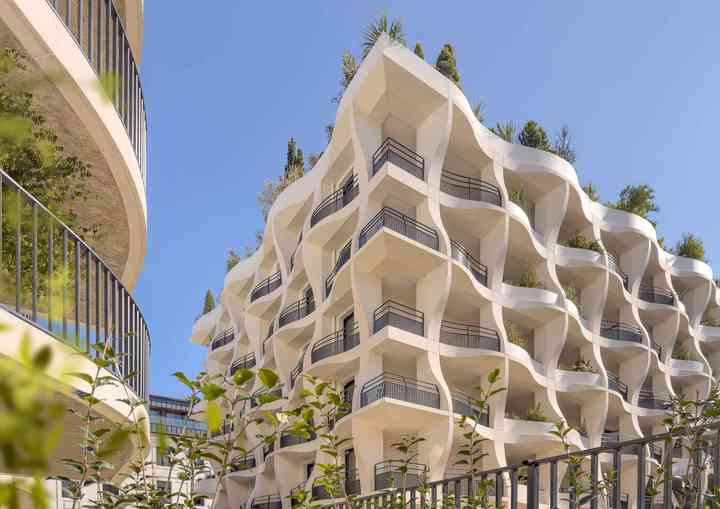
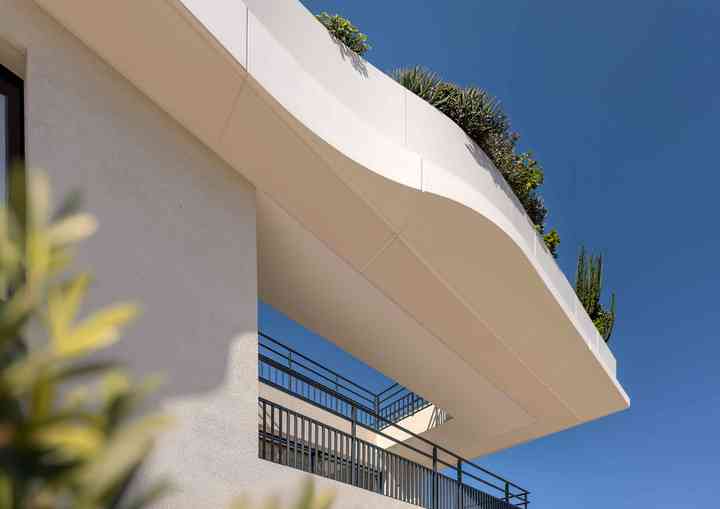

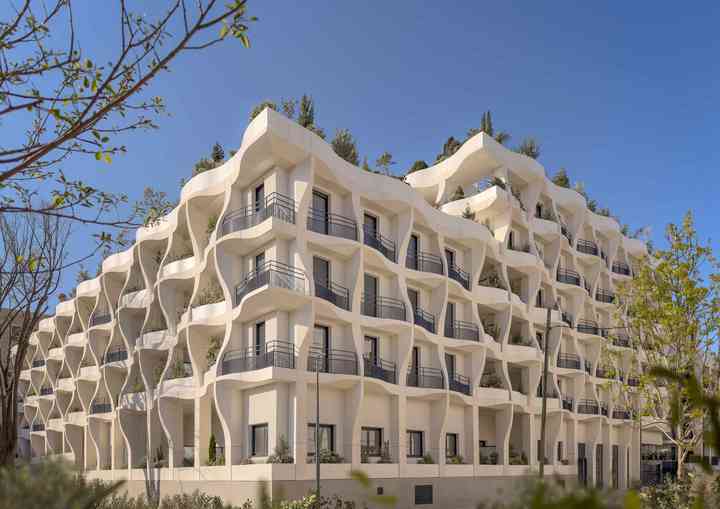
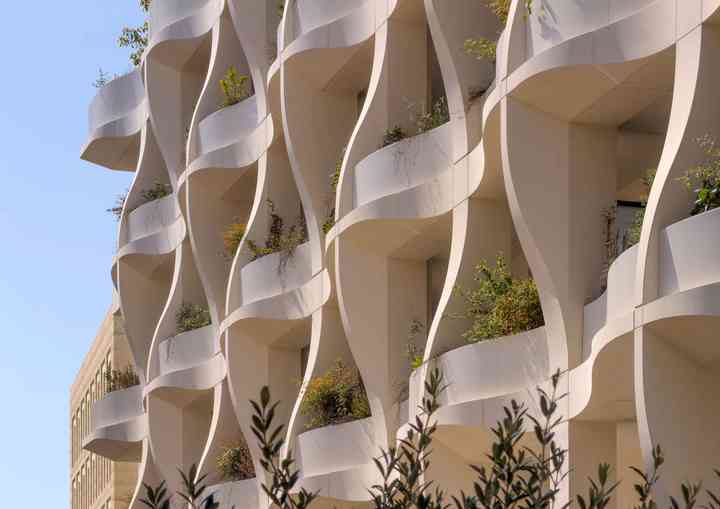
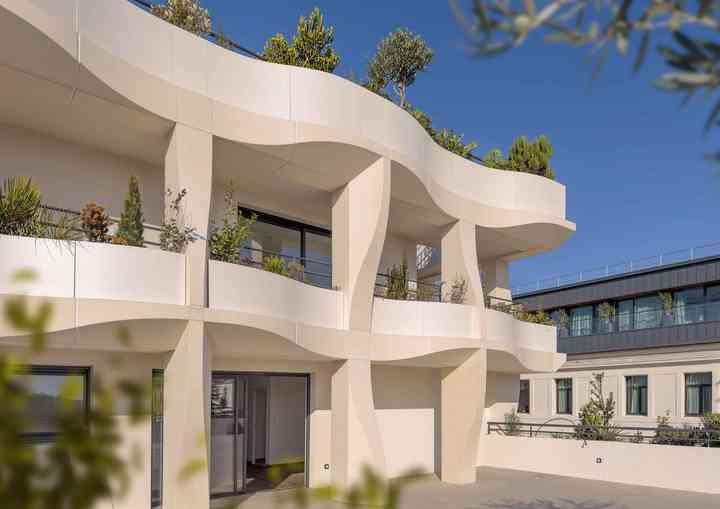
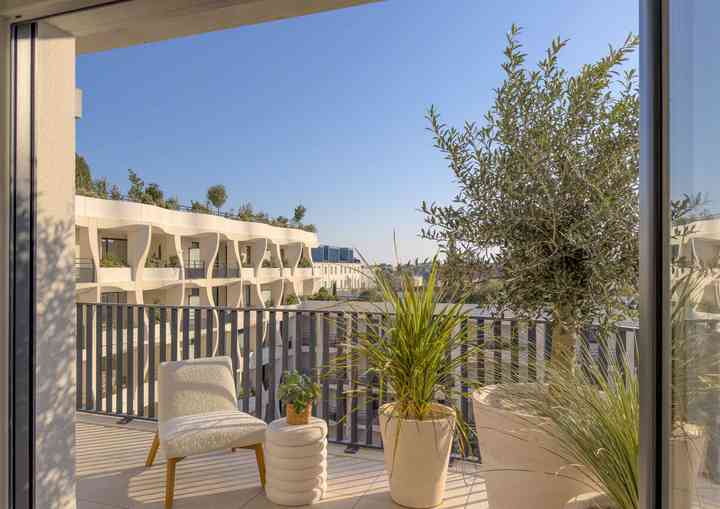
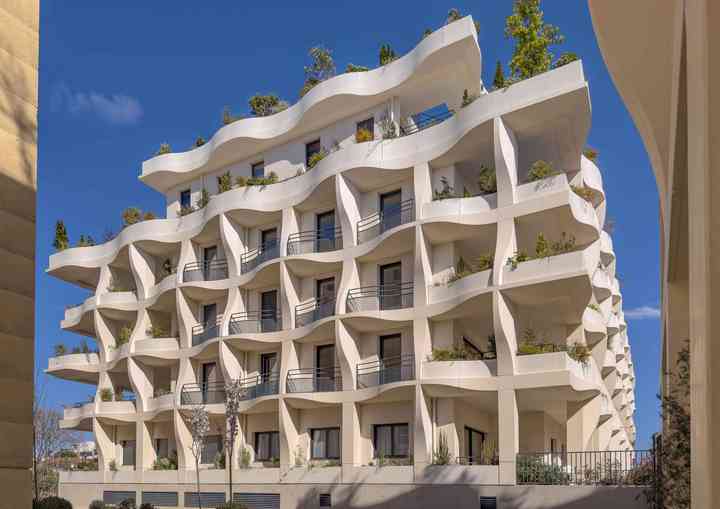
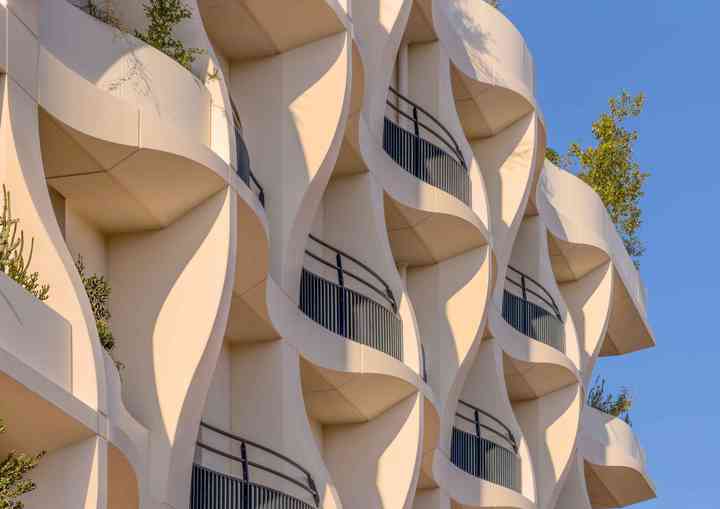
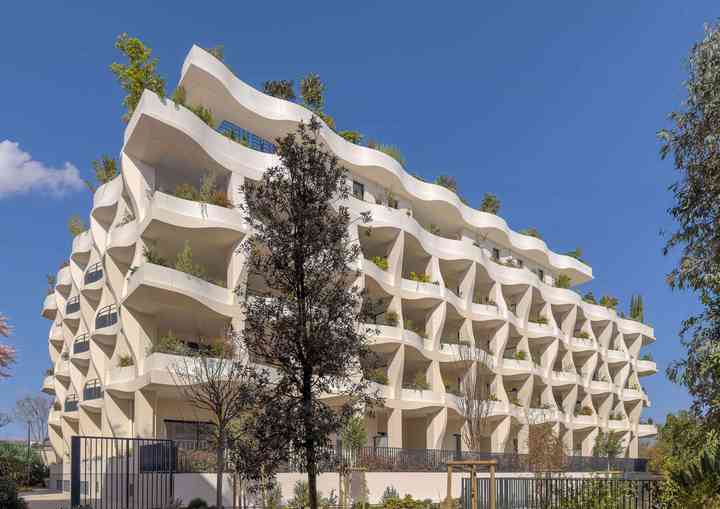
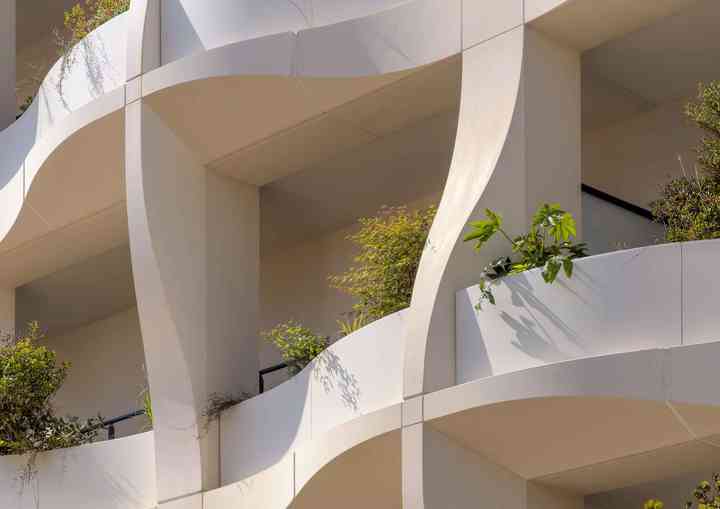

What if the architecture of tomorrow began with a new way of living with the climate?
This is the ambition behind Jardins Secrets, designed by Vincent Callebaut Architectures, Paris, which has been named a Winner of the Future House Awards 2026 in the Affordable Housing category.
Organized by Global Design News and The Chicago Athenaeum: Museum of Architecture and Design, the Future House Awards recognize residential projects from around the world that are rethinking the way we live, highlighting in particular their quality of execution, innovation, materiality, and environmental commitment.
For our practice, this recognition is particularly meaningful. It acknowledges a conviction that lies at the heart of our work: in the face of climate change, architecture must learn to work with the climate rather than fight against it, while creating generous, desirable living environments that are deeply connected to the living world.
With Jardins Secrets, we envision a form of housing in which architecture and landscape are no longer two separate realms, but rather the components of a single ecosystem.
The project draws on the specific characteristics of the site, its orientation, climate, and natural resources to create homes that naturally promote comfort, coolness, and quality of life.
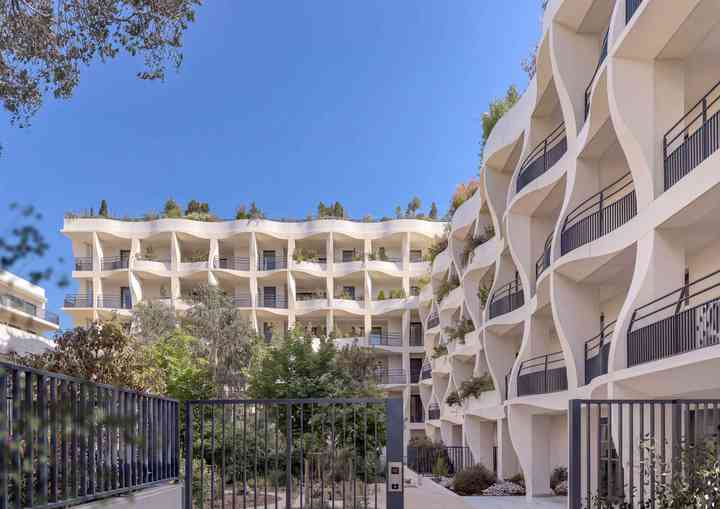
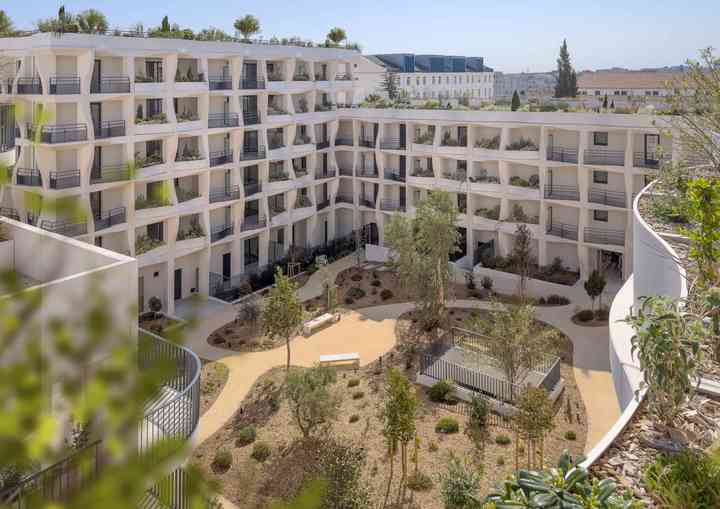
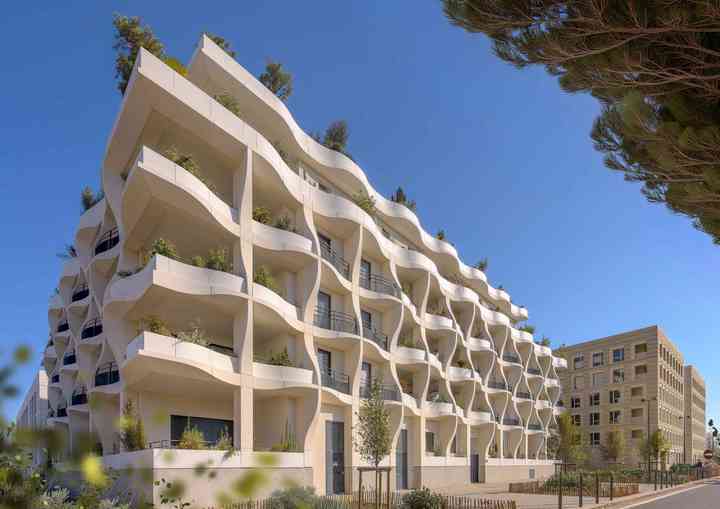
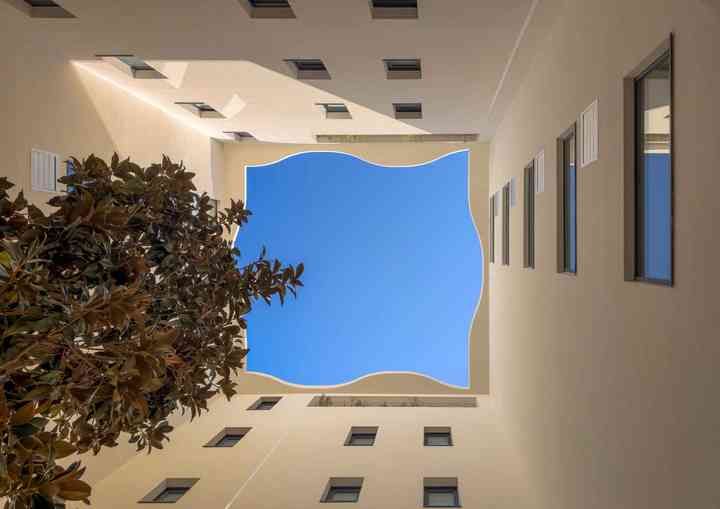
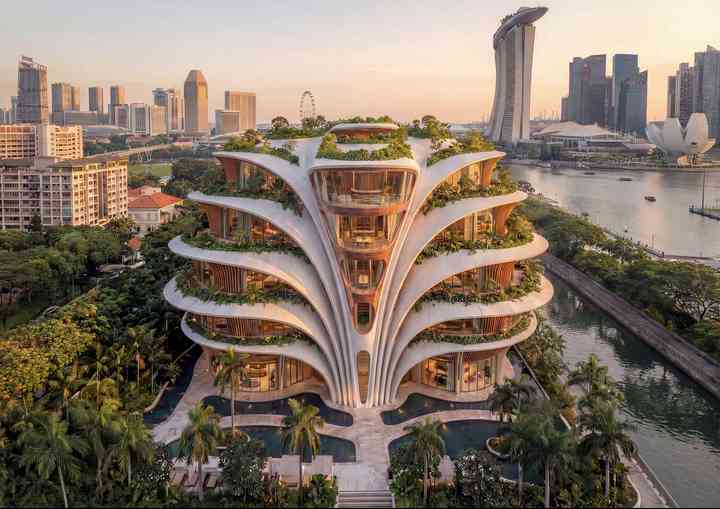
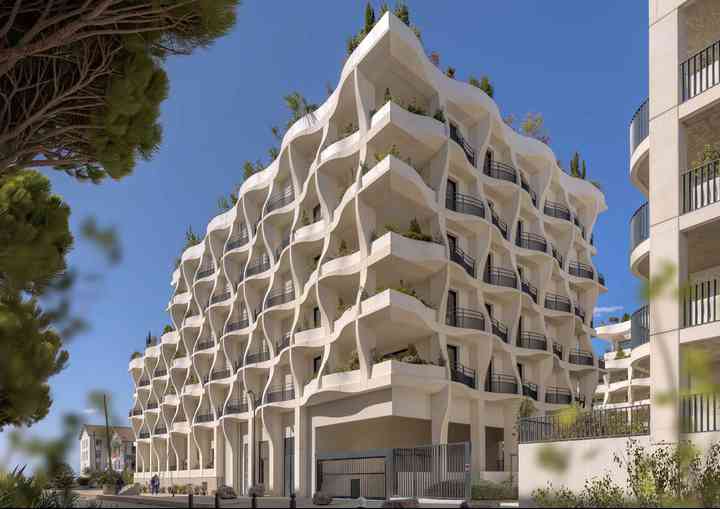
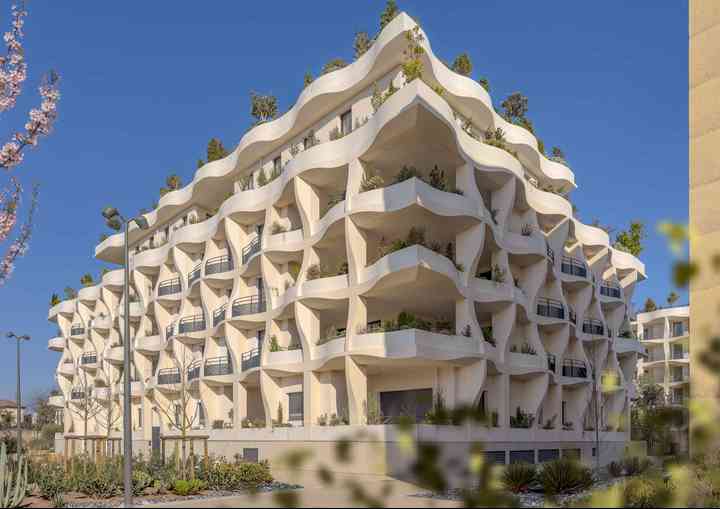
Each home opens generously onto gardens, terraces, and planted spaces. Patios, balconies, and hanging gardens extend the interior spaces outward, creating a porous architecture shaped by light, air, and vegetation.
The bioclimatic design is based on a carefully considered layout and orientation in response to the sun’s path and local climatic conditions, as well as natural ventilation to enhance summer comfort and indoor air quality. Architectural and vegetative shading devices further help to limit overheating.
Vegetation also plays a fundamental role. It contributes to the creation of cool islands, supports biodiversity, and transforms outdoor spaces into genuine places for living.
At Jardins Secrets, bioclimatic design is not a technical response added to the architecture. It is one of its founding principles.
The built geometry, orientations, patios, gardens, loggias, and circulation spaces are conceived as elements of a single system, designed to make the most of the site’s natural resources.
Architecture thus becomes an interface between people, climate, and the living world.
Natural light, air movement, the shade provided by planting, plant evapotranspiration, and the thermal inertia of materials all contribute directly to the comfort of residents. Rather than multiplying technical systems to compensate for the effects of the climate, the project first seeks to work with it.
This approach helps reduce energy needs while enhancing the quality of the living spaces.
The recognition of Jardins Secrets in the Affordable Housing category takes on particular significance in this context.
For us, affordable housing should not mean standardized housing or a compromise in quality. On the contrary, it can become a laboratory for architectural, environmental, and social innovation.
Providing accessible housing also means providing natural light, natural ventilation, outdoor spaces, vegetation, and a privileged relationship with the landscape.
It means making environmental quality not a privilege, but a right for everyone.
Jardins Secrets therefore embodies a vision of housing in which environmental performance and quality of living are not opposing goals. They reinforce one another.
As heatwaves intensify and our territories undergo profound transformations, we believe architecture must go beyond the sole pursuit of energy performance.
It must be resilient, adaptable, and regenerative.
It must be able to provide protection from sunlight and extreme heat, promote natural ventilation, strengthen the presence of vegetation, and create spaces capable of evolving with their environment.
Through Jardins Secrets, we advocate an architecture that is at once high-performing and desirable, bioclimatic and poetic, contemporary and deeply rooted in the living world.
This recognition at the Future House Awards 2026 reinforces this vision: an architecture that does not merely seek to build with less, but to live better.
We warmly thank Global Design News and The Chicago Athenaeum: Museum of Architecture and Design, as well as the international jury of the Future House Awards 2026, composed of Melike Altınışık, Erla Dögg Ingjaldsdóttir, Jenchieh Hung, Nuru Karim, Kulthida Songkittipakdee, and Tryggvi Thorsteinsson, for recognizing Jardins Secrets in the Affordable Housing category.
We share this recognition with all the teams, collaborators, and partners who contributed to the design, development, and construction of this project.
Jardins Secrets carries a simple ambition: to demonstrate that affordable housing can be beautiful, generous, resilient, and deeply connected to its environment.
An architecture that does not simply seek to build for tomorrow, but to invent, today, new ways of inhabiting the world of tomorrow.
_______________________________________________________________________________________________________________________
Et si l’architecture de demain commençait par une nouvelle manière d’habiter avec le climat ?
C’est l’ambition portée par Jardins Secrets, conçu par Vincent Callebaut Architectures, Paris, qui vient de remporter les Future House Awards 2026 dans la catégorie Affordable Housing.
Organisés par Global Design News et The Chicago Athenaeum: Museum of Architecture and Design, les Future House Awards distinguent à l’échelle internationale les projets résidentiels qui réinventent les manières d’habiter, en valorisant notamment leur qualité d'exécution, leur innovation, leur matérialité et leur engagement environnemental.
Pour notre agence, cette reconnaissance est particulièrement significative. Elle vient saluer une conviction qui guide notre travail : face au changement climatique, l’architecture doit apprendre à composer avec le climat plutôt qu’à le subir, tout en offrant des lieux de vie généreux, désirables et profondément connectés au vivant.
Avec Jardins Secrets, nous imaginons un habitat où architecture et paysage ne sont plus deux univers distincts, mais les composantes d’un même écosystème.
Le projet s’appuie sur les caractéristiques du site, son orientation, son climat et ses ressources naturelles pour créer des logements qui favorisent naturellement le confort, la fraîcheur et la qualité de vie.
Chaque logement s’ouvre largement sur des jardins, terrasses et espaces végétalisés. Les patios, balcons et jardins suspendus prolongent les espaces intérieurs et créent une architecture poreuse, traversée par la lumière, l’air et la végétation.
La conception bioclimatique repose notamment sur une implantation et des orientations adaptées à la course du soleil et aux conditions climatiques locales, une ventilation naturelle favorisant le confort d’été et la qualité de l’air intérieur, ainsi que des dispositifs architecturaux et végétaux permettant de limiter les surchauffes.
La végétation joue également un rôle essentiel. Elle participe à la création d’îlots de fraîcheur, favorise la biodiversité et transforme les espaces extérieurs en véritables lieux de vie.
À Jardins Secrets, le bioclimatisme n’est pas une réponse technique ajoutée à l’architecture. Il en constitue le principe fondateur.
La géométrie bâtie, les orientations, les patios, les jardins, les loggias et les circulations sont conçus comme les éléments d’un même système, capable de tirer parti des ressources naturelles du site.
L’architecture devient ainsi une interface entre l’habitant, le climat et le vivant.
La lumière naturelle, les mouvements de l’air, l’ombre des plantations, l’évapotranspiration du végétal et l’inertie des matériaux participent directement au confort des habitants. Plutôt que de multiplier les équipements pour corriger les effets du climat, le projet cherche d’abord à travailler avec lui.
Cette approche permet de réduire les besoins énergétiques tout en améliorant la qualité des espaces de vie.
La reconnaissance de Jardins Secrets dans la catégorie Affordable Housing prend ici une dimension particulière.
Pour nous, le logement abordable ne doit pas être synonyme de logement standardisé ou de qualité moindre. Il peut au contraire devenir un laboratoire d’innovation architecturale, environnementale et sociale.
Offrir un habitat accessible, c’est aussi offrir de la lumière, de la ventilation naturelle, des espaces extérieurs, de la végétation et un rapport privilégié au paysage.
C’est faire de la qualité environnementale non pas un privilège, mais un droit pour tous.
Jardins Secrets défend ainsi une vision du logement dans laquelle performance environnementale et qualité d’habiter ne sont pas opposées. Elles se renforcent mutuellement.
Face à l’intensification des épisodes de chaleur et aux transformations de nos territoires, nous sommes convaincus que l’architecture doit aller au-delà de la seule recherche de performance énergétique.
Elle doit être résiliente, adaptable et régénérative.
Elle doit pouvoir protéger du soleil et des fortes chaleurs, favoriser la ventilation naturelle, renforcer la présence du végétal et créer des espaces capables d’évoluer avec leur environnement.
À travers Jardins Secrets, nous défendons une architecture à la fois performante et désirable, bioclimatique et poétique, contemporaine et profondément ancrée dans le vivant.
Cette distinction aux Future House Awards 2026 vient conforter cette vision : celle d’une architecture qui ne cherche pas seulement à construire avec moins, mais à habiter mieux.
Nous remercions chaleureusement Global Design News et The Chicago Athenaeum: Museum of Architecture and Design, ainsi que le jury international des Future House Awards 2026 composé de Melike Altınışık, Erla Dögg Ingjaldsdóttir, Jenchieh Hung, Nuru Karim, Kulthida Songkittipakdee et Tryggvi Thorsteinsson, pour avoir distingué Jardins Secrets dans la catégorie Affordable Housing.
Nous partageons cette reconnaissance avec l’ensemble des équipes, collaborateurs et partenaires qui ont contribué à la conception, au développement et à la construction de ce projet.
Jardins Secrets porte une ambition simple : démontrer que le logement abordable peut être beau, généreux, résilient et profondément connecté à son environnement.
Une architecture qui ne cherche pas seulement à construire pour demain, mais à inventer dès aujourd’hui les manières d’habiter le monde de demain.
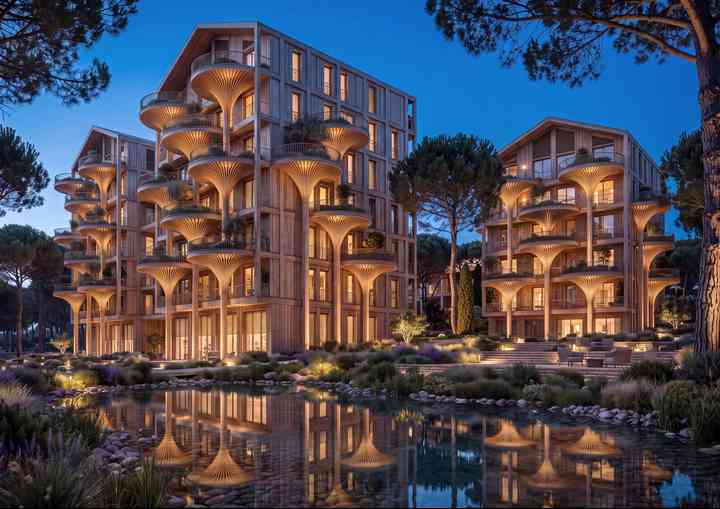
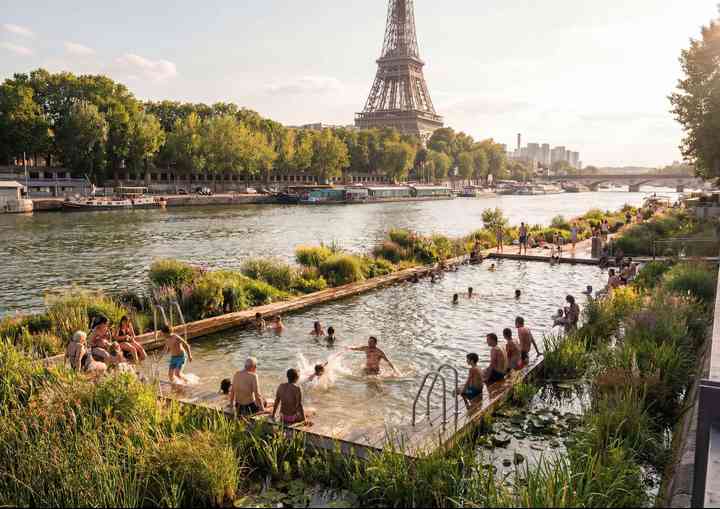

Copyright : Vincent Callebaut Architectures
All rights reserved.